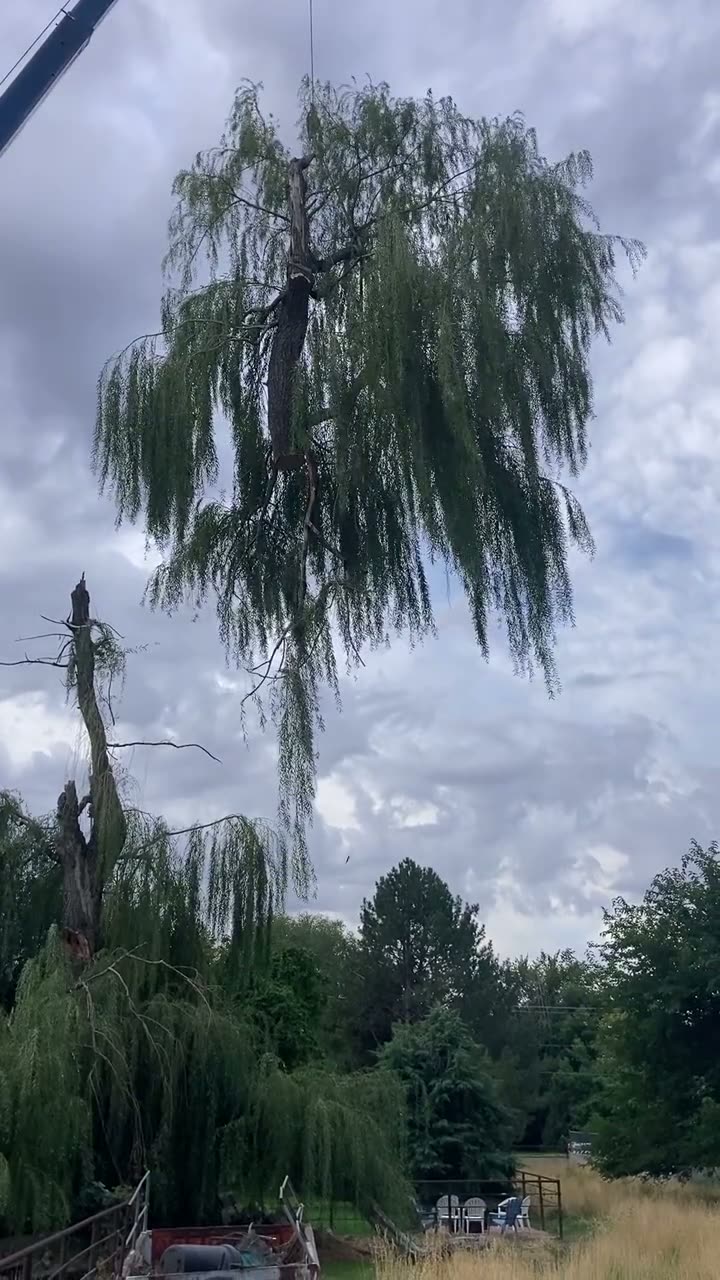
Not every tree with a problem needs to come down. Some need pruning, cabling, or just time to recover. But there are clear signs that a tree has become a hazard and removal is the safest option.
1. Leaning with soil disturbance. If the tree is leaning and you see raised soil, exposed roots, or a crack on the opposite side, the root plate is failing. This tree can fall with little warning.
2. Large cracks or cavities in the trunk. A hollow trunk is not automatically dangerous, but a large crack, seam, or decayed area on the side facing the house is a structural problem.
3. Dead canopy. If more than a third of the canopy is dead — no leaves, brittle branches, missing bark — the tree is in decline. It may also be diseased and spreading to nearby trees.
4. Fungus at the base. Mushrooms or conks growing from the trunk or roots are signs of internal decay. Some fungi rot wood faster than others, but all of them mean the tree is losing strength.
5. Power line contact. Any tree touching a power line is a serious hazard. Do not trim it yourself. Call your utility and a licensed tree service.
6. Storm damage. A split trunk, major limb loss, or a partially uprooted tree after a storm often cannot be saved. Even if it looks stable, internal damage may make it unsafe.
7. It is the wrong tree in the wrong place. A large tree within a few feet of a foundation, sewer line, or driveway will only cause more problems as it grows. Removing it early is cheaper than repairing the damage later.
If you see any of these signs, call us for a free assessment. We will give you an honest answer about whether the tree can be saved or should be removed.
Call or text for a free quote or emergency tree service across Davis and Weber Counties.
Call 801-513-3460Get a free, no-pressure quote
We'll come look at the tree, tell you honestly what it needs, and give you a firm price. Call or text today.